Publications
2026
- IEEE Access
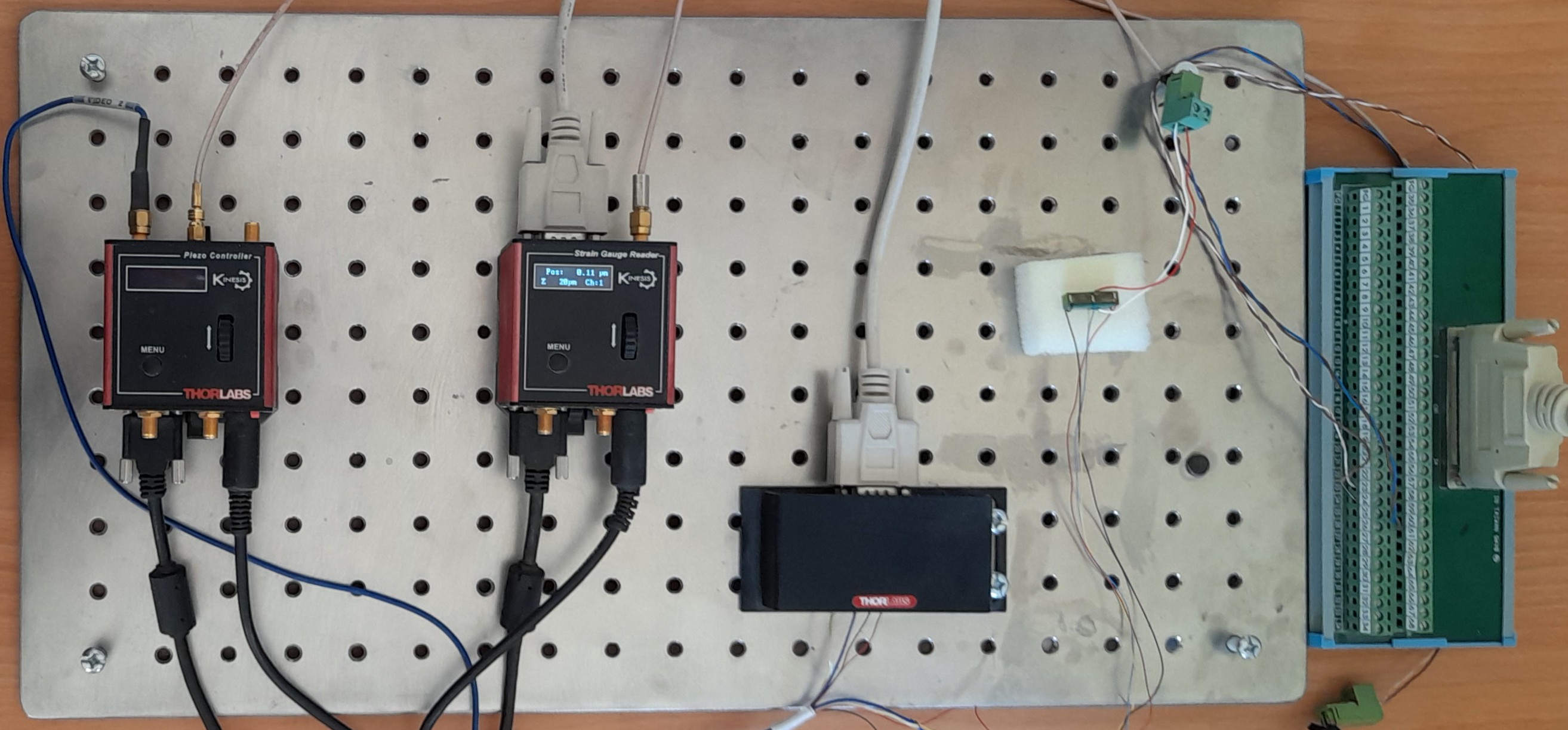 Robust Control of Affine Nonlinear Systems Using an Energy-Efficient Gray-Box Framework: A Practical ValidationAlireza Nezamzadeh, Mohammadreza Esmaeilidehkordi, and Nikolai DrigalIEEE Access, 2026
Hysteresis nonlinearities, parametric uncertainties, and external disturbances substantially impair the performance and energy efficiency of piezoelectric actuators (PEAs), which are extensively utilized in high-precision positioning and energy-sensitive actuation systems. Conventional model-based control strategies depend on accurate hysteresis modeling and parameter identification, which are often difficult to accomplish and may deteriorate under varying operating conditions. By contrast, data-driven methods usually focus on tracking performance without making sure that closed-loop stability or energy-aware operation is always present. This paper introduces a novel gray-box modeling and control framework designed to address the challenges associated with piezoelectric actuator systems. It integrates a brain emotional learning-based intelligent controller (BELBIC) with a fuzzy extended state observer (FESO). The BELBIC component learns about unknown nonlinear dynamics in real time, eliminating the need for explicit hysteresis modeling or precise parameter identification. Simultaneously, the FESO estimates unmeasured system states and aggregates disturbances related to hysteresis as they occur. This approach enables effective disturbance compensation without requiring hysteresis inversion. A comprehensive Lyapunov-based stability analysis is conducted for the entire BELBIC–FESO closed-loop system, considering the interactions between the learning mechanism, observer dynamics, and control law. Results from both simulations and tests on a real piezoelectric actuator show that it can track accurately, reduce hysteresis effectively, be more resistant to uncertainties, and use less energy. This is shown by lower control oscillations and optimized actuation effort.
@article{nezamzadeh2026robust, title = {Robust Control of Affine Nonlinear Systems Using an Energy-Efficient Gray-Box Framework: A Practical Validation}, author = {Nezamzadeh, Alireza and Esmaeilidehkordi, Mohammadreza and Drigal, Nikolai}, journal = {IEEE Access}, year = {2026}, publisher = {IEEE}, doi = {10.1109/ACCESS.2026.3695056}, } - Energies
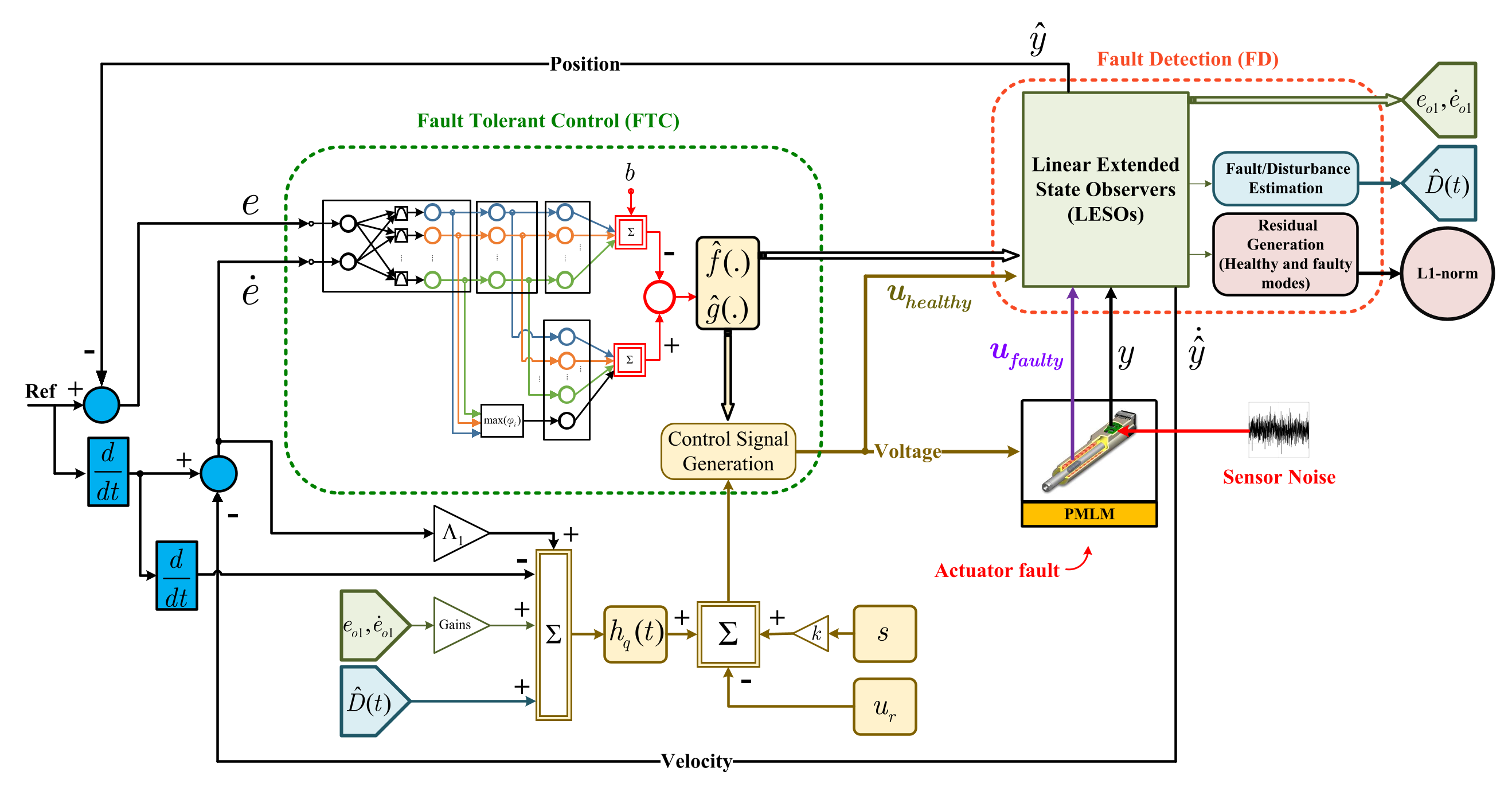 Fault Detection and Fault-Tolerant Control of Permanent Magnet Linear Motors Using an Emotional Learning-Based Neural Network and a Linear Extended State ObserverAlireza Nezamzadeh, Mohammadreza Esmaeilidehkordi, Hamed Habibi, and 3 more authorsEnergies, 2026
This paper presents a unified framework for reliable motion control of permanent magnet linear motors (PMLMs) by integrating fault detection (FD) and fault-tolerant control (FTC). The framework combines a brain emotional learning-based intelligent controller (BELBIC) with a linear extended state observer (LESO) to enable rapid detection and mitigation of abrupt and incipient faults, as well as disturbances and sensor noise that degrade tracking accuracy and system reliability. The LESO is employed to estimate unknown dynamics and lumped disturbances and to generate residuals for reliable fault detection, while BELBIC provides adaptive and robust control actions without requiring prior knowledge of system parameters or explicit fault models. Extensive simulation studies under actuator faults, system dynamics faults, external disturbances, and measurement noise are conducted. Comparative evaluations with benchmark approaches demonstrate improved fault detection speed, tracking accuracy, and robustness of the proposed framework, highlighting its potential for enhancing reliability and operational continuity in high-precision industrial applications.
@article{nezamzadeh2026fault, title = {Fault Detection and Fault-Tolerant Control of Permanent Magnet Linear Motors Using an Emotional Learning-Based Neural Network and a Linear Extended State Observer}, author = {Nezamzadeh, Alireza and Esmaeilidehkordi, Mohammadreza and Habibi, Hamed and Yazdani, Amirmehdi and Wang, Hai and Fekih, Afef}, journal = {Energies}, volume = {19}, number = {6}, pages = {1413}, year = {2026}, publisher = {MDPI}, doi = {https://doi.org/10.3390/en19061413}, } - IEEE Access
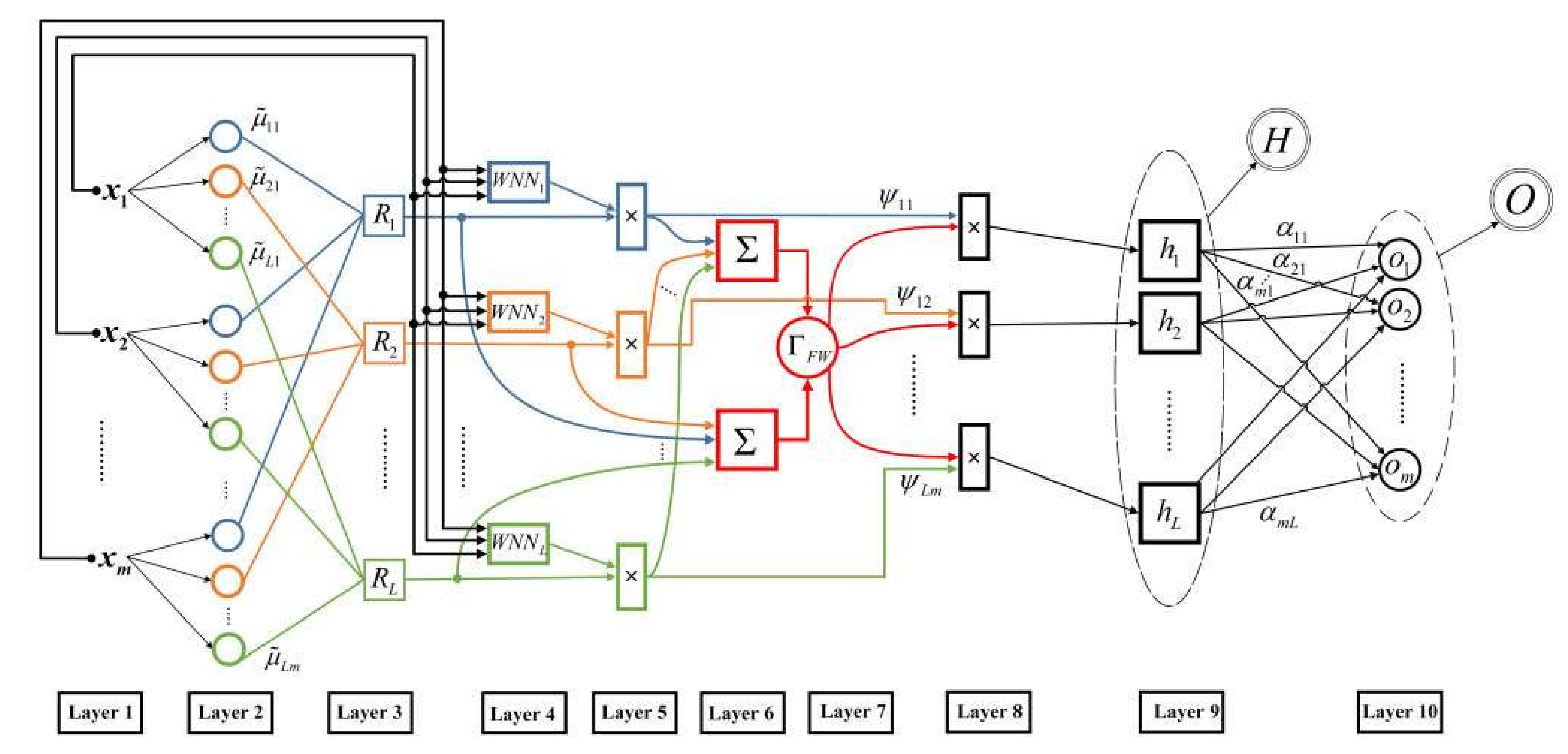 Sequential Type-2 Fuzzy Wavelet for Robust Online Control ApplicationsMohammadreza Esmaeilidehkordi, Maryam Zekri, Iman Izadi, and 4 more authorsIEEE Access, 2026
Controlling nonlinear systems in real-time applications, such as robotics, aerospace, and industrial automation, poses significant challenges due to their complex dynamics, strong nonlinearities, and susceptibility to external disturbances and parameter uncertainties. Traditional intelligent control methods often struggle with these complexities, particularly in uncertain environments, leading to issues with accuracy, stability, and adaptability. Existing approaches, including fuzzy logic-based control and extreme learning machines (ELMs), offer promising solutions but still face limitations such as noise sensitivity, sensitivity to random initialization, lack of robustness in parameter updates, and inadequate robustness in real-time scenarios. This paper presents a novel robust intelligent control framework to tackle challenges in online learning and uncertainty management for nonlinear systems. An online updating method that integrates the Householder block exact QR decomposition-based recursive least squares algorithm is proposed, improving numerical stability and robustness during parameter updates, especially under noisy and uncertain conditions. By applying this method, the model becomes less sensitive to random initialization and more resilient to outliers. Building on this, a new robust online controller based on a sequential type-2 fuzzy wavelet is developed. This controller combines interval type-2 fuzzy logic for uncertainty modeling, wavelet neural networks for time-frequency localization, and an extreme learning machine for fast, one-pass learning. Architecture supports dynamic and robust parameter adaptation while keeping the hidden layer fixed, enhancing efficiency and adaptability in real-time applications. Additional contributions include an adaptive residual weighting strategy, regularized QR decomposition, and a recursive update scheme using Householder transformations. The proposed system significantly reduces sensitivity to random initialization and outliers, offering improved adaptability and performance in real-time applications. The numerical performance indices demonstrate that the ROC-ST2FWELM outperforms existing control methods, including online sequential type-2 fuzzy wavelet extreme learning machine (OS-T2FWELM) and fractional order PID combined with extended state observer (FOPID-ESO), across different real-world and simulated systems, including the Twin Rotor MIMO System (TRMS) and the backhoe hydraulic system. Specifically, the TRMS results show a Root Mean Square Error (RMSE) of the preposed controller for at 0.0988 and 0.0621, OS-T2FWELM at 0.2631 and 0.2334, and FOPID-ESO at 0.3324 and 0.3261 for the yaw angle and the pitch angle, respectively.
@article{esmaeilidehkordi2026sequential,
  title = {Sequential Type-2 Fuzzy Wavelet for Robust Online Control Applications},
  author = {Esmaeilidehkordi, Mohammadreza and Zekri, Maryam and Izadi, Iman and Sheikholeslam, Farid and Nezamzadeh, Alireza and Hosseinpour, Soleiman and Sepehri, Nariman},
  journal = {IEEE Access},
  year = {2026},
  publisher = {IEEE},
  doi = {10.1109/ACCESS.2026.3662269},
}
2025
- EPDC
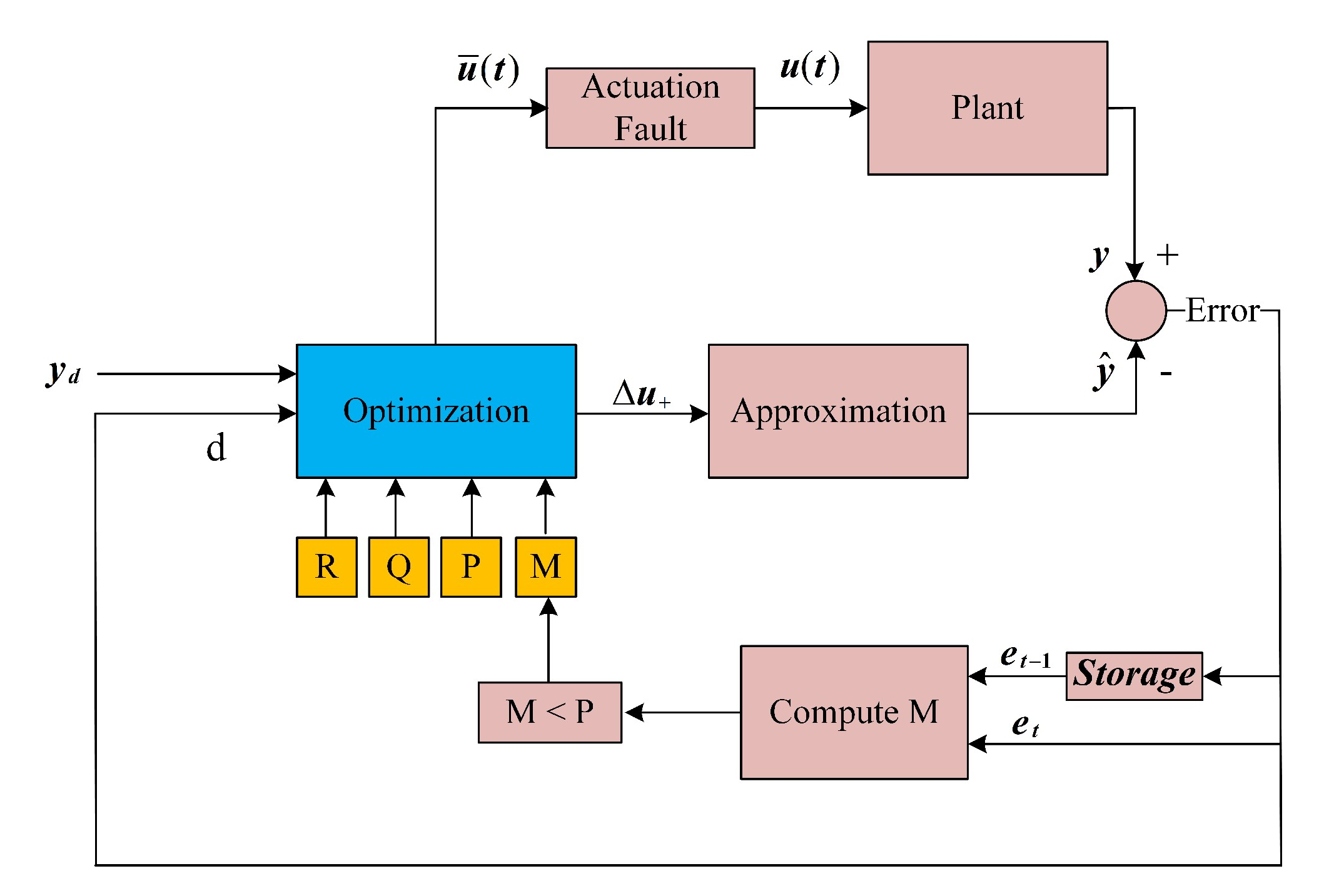 Fault Tolerant Control of Synchronous Generator Using a New MPC Controller ApproachAlireza Nezamzadeh and Mohammadreza EsmaeilidehkordiIn 2025 29th International Electrical Power Distribution Conference (EPDC), 2025
This study suggests a novel methodology for one of the model predictive control strategies. It compares it to a PID controller regarding fault tolerance in a linear system with actuator failures. We use one of the most well-known approaches, dynamic matrix control, and an optimization method based on the linear quadratic regulator formulation to get efficient actuator instructions that increase tracking performance as well as the system’s rise and settling times. First, we employ a dynamic matrix control to extract optimal control input, and then we modify its updating technique to increase performance in fault circumstances. The proposed method is a methodology that uses the difference between current and previous errors to regulate the control horizon in order to forecast a larger number of future outputs. The horizon is increased based on the conditions and computational load to reduce the effects of faults on system performance. Finally, simulations are utilized to compare and assess the proposed method’s performance under various scenarios, demonstrating that our approach outperforms PID and the standard dynamic matrix control method.
@inproceedings{nezamzadeh2025fault, title = {Fault Tolerant Control of Synchronous Generator Using a New MPC Controller Approach}, author = {Nezamzadeh, Alireza and Esmaeilidehkordi, Mohammadreza}, booktitle = {2025 29th International Electrical Power Distribution Conference (EPDC)}, pages = {1--7}, year = {2025}, organization = {IEEE}, doi = {10.1109/EPDC67173.2025.11278246}, } - ICEE
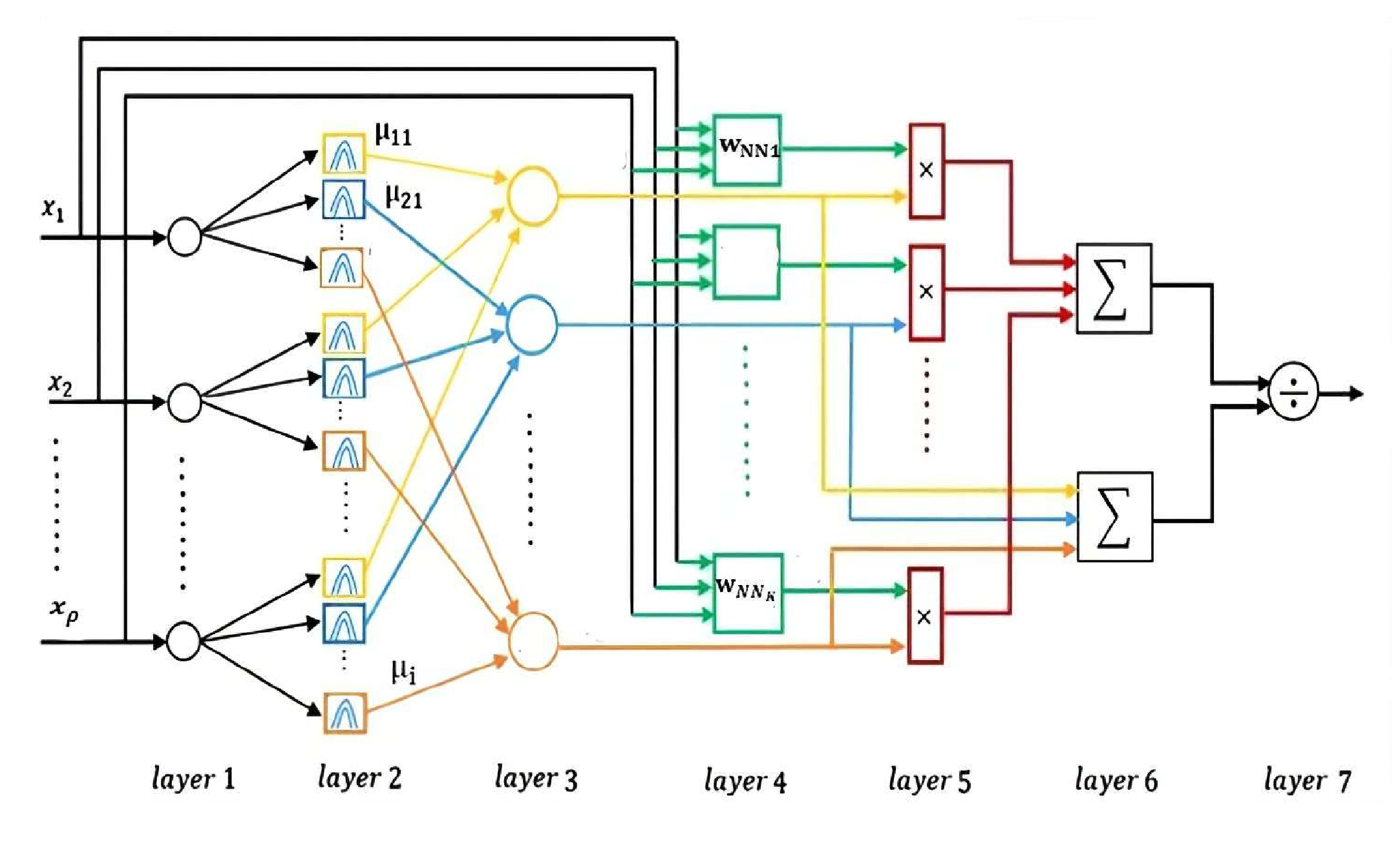 Type-2 Fuzzy Wavelet Control for a Quadruple-Tank System Based on Disturbance RejectionMohammadreza Esmaeilidehkordi, Alireza Nezamzadeh, Maryam Zekri, and 2 more authorsIn 2025 33rd International Conference on Electrical Engineering (ICEE), 2025
This paper introduces the Type-2 Fuzzy Wavelet Controller (T2FWC), a novel control framework designed for nonlinear systems influenced by uncertainty and noise. This approach simplifies the wavelet transformation process by requiring only a single coefficient for each two output, striking a balance between structural complexity and computational efficiency. Performance comparisons of the T2FWC with the reinforcement learning algorithm and the PID controllers indicate a significant reduction in the number of linear trainable parameters is reduced, and the system demonstrates enhanced robustness against random initialization, all while maintaining control accuracy. The results demonstrate the effectiveness of the T2FWC in managing disturbances in liquid levels within a Quadruple Tank system, offering a robust alternative for optimizing control strategies in complex process environments. This research highlights the potential of combining advanced control techniques to enhance system performance amid variability and uncertainty.
@inproceedings{esmaeilidehkordi2025type, title = {Type-2 Fuzzy Wavelet Control for a Quadruple-Tank System Based on Disturbance Rejection}, author = {Esmaeilidehkordi, Mohammadreza and Nezamzadeh, Alireza and Zekri, Maryam and Izadi, Iman and Sheikholeslam, Farid}, booktitle = {2025 33rd International Conference on Electrical Engineering (ICEE)}, pages = {163--168}, year = {2025}, organization = {IEEE}, doi = {10.1109/ICEE67339.2025.11213646}, } - SGC
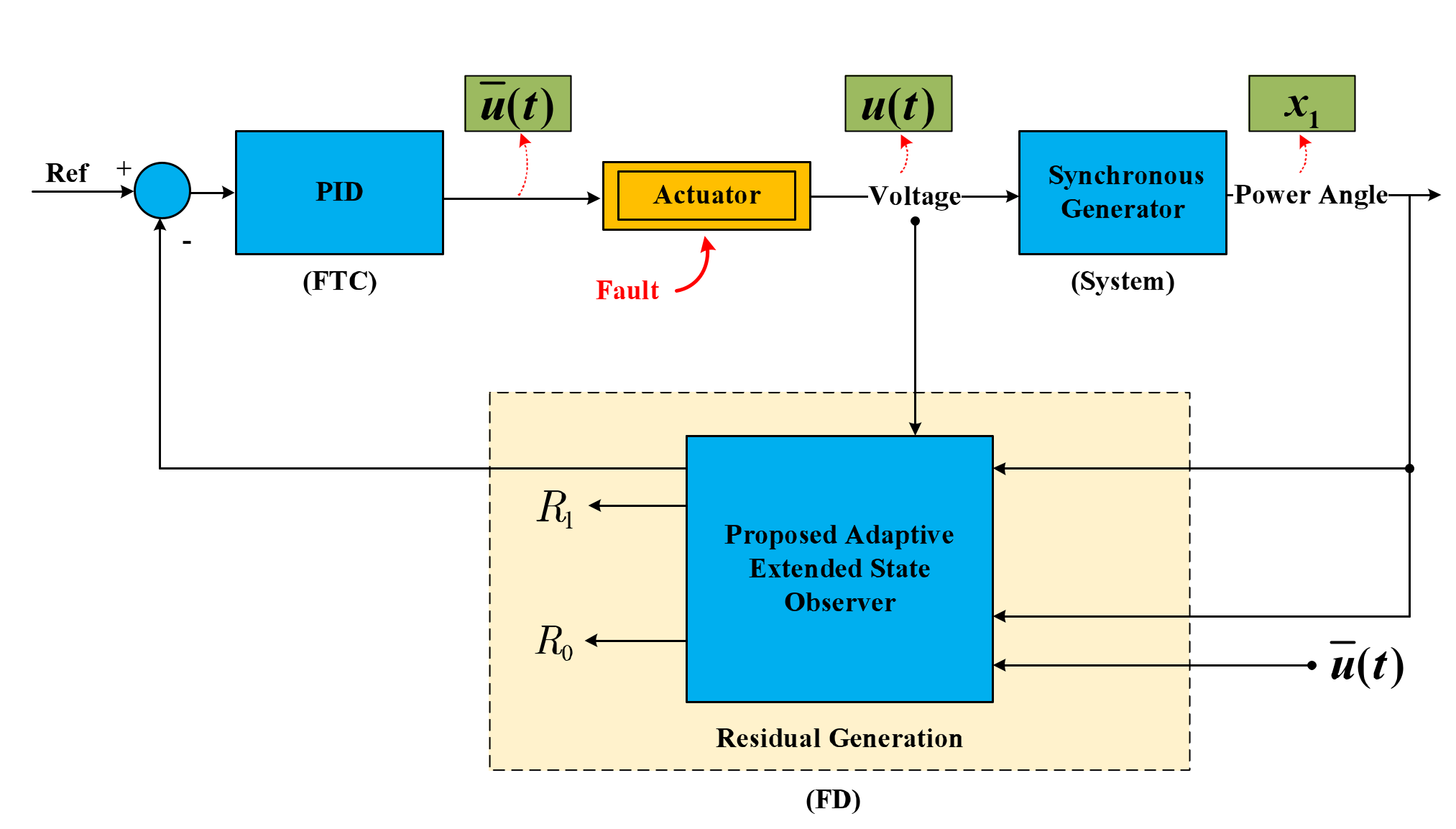 Rapid Fault Detection Strategy for Synchronous Generators Connected to The Power GridAlireza Nezamzadeh and Mohammadreza EsmaeilidehkordiIn 2025 15th Smart Grid Conference (SGC), 2025
Reliable and fast detection of small actuator faults in synchronous generators (SGs) is challenging: the signatures are weak, transients are short, and high sensitivity often amplifies noise. We present a bank of adaptive extended state observers (AESOs) that produces mode-discriminative residuals for healthy and faulty dynamics, paired with a principled moving-window L1 decision test. The observers lump modeling error and fault effects into an extended state while using error-driven, nonlinear gains to boost sensitivity only when needed, thus avoiding noise blow-up near the origin. Under mild boundedness assumptions, the estimation error admits a Lyapunov-style negative semi-definite bound, ensuring practical stability of the adaptive scheme. On standard SG (SMIB) simulations with multiplicative actuator loss (ufaulty = q uhealthy), the method consistently reduces detection delay and estimation error versus high-gain and conventional ESOs; faults are flagged within ≈0.5 s of onset in representative tests (e.g., td ∈ [0.52, 0.58] s), while maintaining smooth residuals that curb false alarms. The design is modular (drop-in before existing controllers), requires no plant re-identification, and comes with practical tuning rules for window length, gains, and thresholds—making it directly applicable to protection and condition-monitoring layers in grid-connected SGs.
@inproceedings{nezamzadeh2025rapid,
  title = {Rapid Fault Detection Strategy for Synchronous Generators Connected to The Power Grid},
  author = {Nezamzadeh, Alireza and Esmaeilidehkordi, Mohammadreza},
  booktitle = {2025 15th Smart Grid Conference (SGC)},
  pages = {1--7},
  year = {2025},
  organization = {IEEE},
  doi = {10.1109/SGC69320.2025.11372271},
}
2024
- ICEE
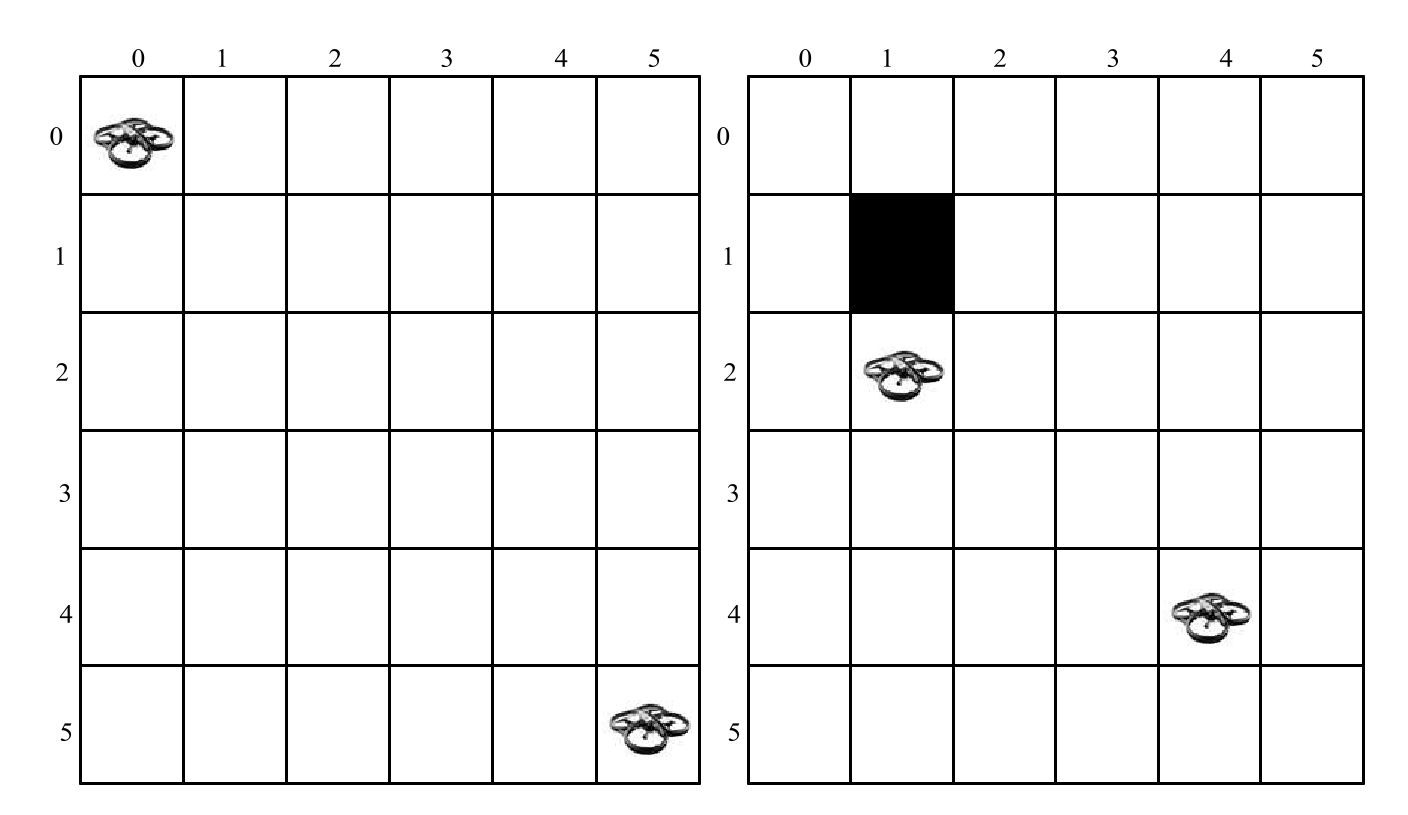 Cooperative coverage path planning using q-learning and sarsa in two environmentsAlireza Nezamzadeh, Hamed Jalaly Bidgoly, and Marzieh KamaliIn 2024 32nd International Conference on Electrical Engineering (ICEE), 2024
This paper presents the coverage environment by multi agents using reinforcement learning with Q-learning and Sarsa algorithms. Two environments are explored to study cooperative coverage path planning with these algorithms. The goal is to achieve coverage in the environment by having agents collaborate to reduce energy consumption. Initially, an obstacle-free environment is examined, then an obstacle is considered in the environment. The proposed algorithm involves sharing experiences among agents to cover environments containing obstacles, and compares its convergence speed to scenarios without sharing experiences. The proposed algorithm’s performance is assessed through different simulations.
@inproceedings{nezamzadeh2024cooperative, title = {Cooperative coverage path planning using q-learning and sarsa in two environments}, author = {Nezamzadeh, Alireza and Bidgoly, Hamed Jalaly and Kamali, Marzieh}, booktitle = {2024 32nd International Conference on Electrical Engineering (ICEE)}, pages = {1--5}, year = {2024}, organization = {IEEE}, doi = {10.1109/ICEE63041.2024.10668053}, } - ICCKE
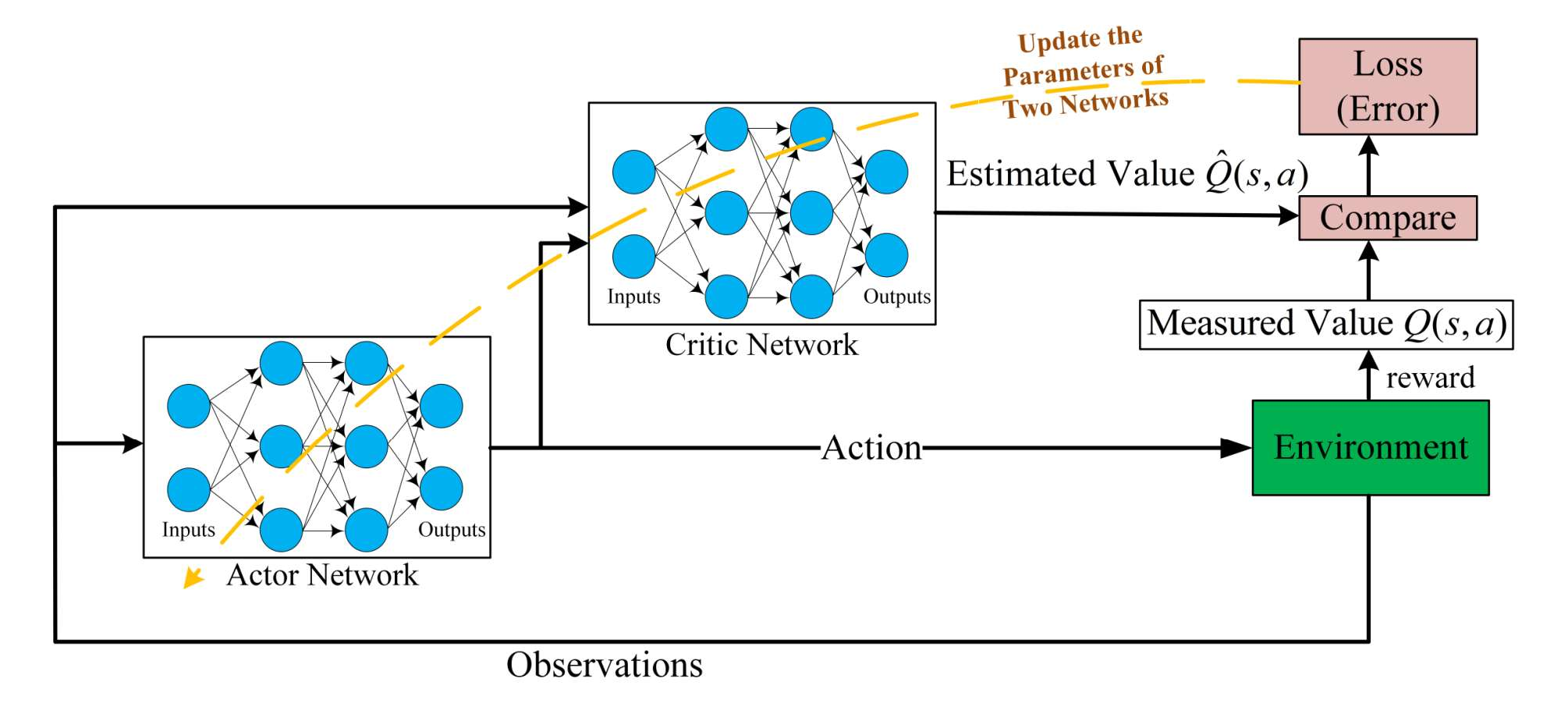 Disturbance rejection in quadruple-tank system by proposing new method in reinforcement learningAlireza Nezamzadeh and Mohammadreza EsmaeilidehkordiIn 2024 14th International Conference on Computer and Knowledge Engineering (ICCKE), 2024
This paper aims to propose a new method for reinforcement learning and compare it with a PID controller in the Quadruple-tank system in the presence of uncertainty. We use one of the popular structures called actor-critic and train it using a deep deterministic policy gradient algorithm. These methods are compared in terms of accuracy and rise time to show which one can have better performance if we consider uncertainty. The proposed method represents an approach that considers some changes in observation dimensions by a series of error items consisting of some previous and current errors and then trains the Reinforcement Learning algorithm through these new observations. Finally, the results of these methods are compared by simulations and the proposed method’s performance is evaluated. Which specifies our approach has better performance.
@inproceedings{nezamzadeh2024disturbance,
  title = {Disturbance rejection in quadruple-tank system by proposing new method in reinforcement learning},
  author = {Nezamzadeh, Alireza and Esmaeilidehkordi, Mohammadreza},
  booktitle = {2024 14th International Conference on Computer and Knowledge Engineering (ICCKE)},
  pages = {137--142},
  year = {2024},
  organization = {IEEE},
  doi = {10.1109/ICCKE65377.2024.10874542},
}